


Willkommen: Noerenberg Estate on Crystal Bay
A Garden of Legacy on Lake Minnetonka’s North Shore
Along the tranquil edge of Crystal and Maxwell Bays, where the lake runs deep and clear, a garden unfolds in timeless harmony with the shoreline. This is Noerenberg Memorial Gardens—one of the most historic and serene destinations on Lake Minnetonka. But long before it became a public sanctuary and park, it was one of the lake’s great Gilded Age estates: a place called Willkommen, where the Noerenberg family lived, gardened, entertained, and quietly built a legacy. It's also in close proximity to Little Orchard Way.
A Legacy Begins on Crystal Bay
The story begins in 1890, when Frederick Noerenberg, founder of Grain Belt Brewery, purchased 73 acres of lakeshore property in Orono. His vision was both ambitious and exacting.
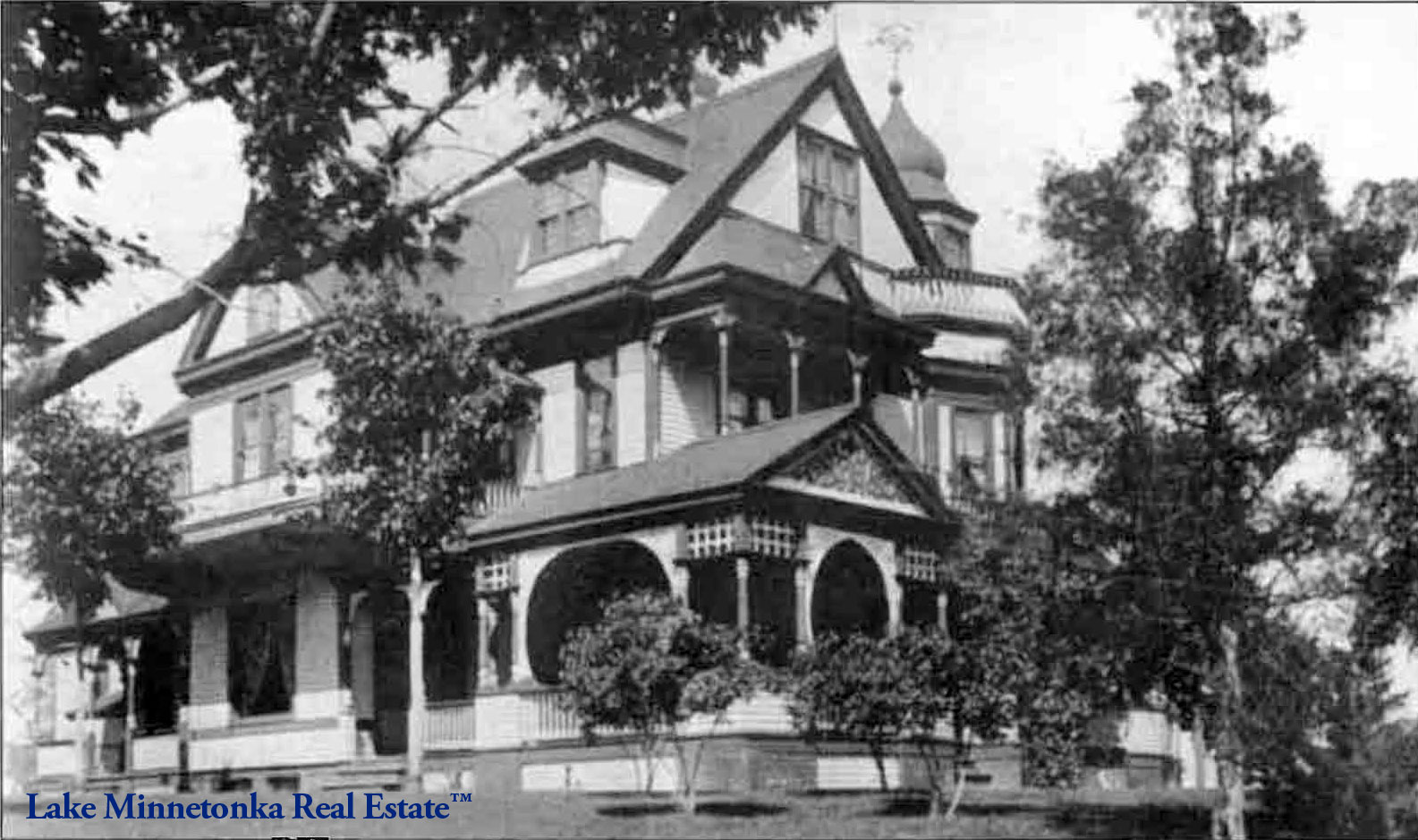
On this gently rising parcel overlooking Crystal Bay, he built one of the first permanent residences on the lake—a stately Queen Anne home with eight bedrooms, wide verandas, and commanding views of the water. The estate, which he named “Willkommen,” would become his family's summer refuge and personal Eden.
Willkommen: A Name and an Invitation
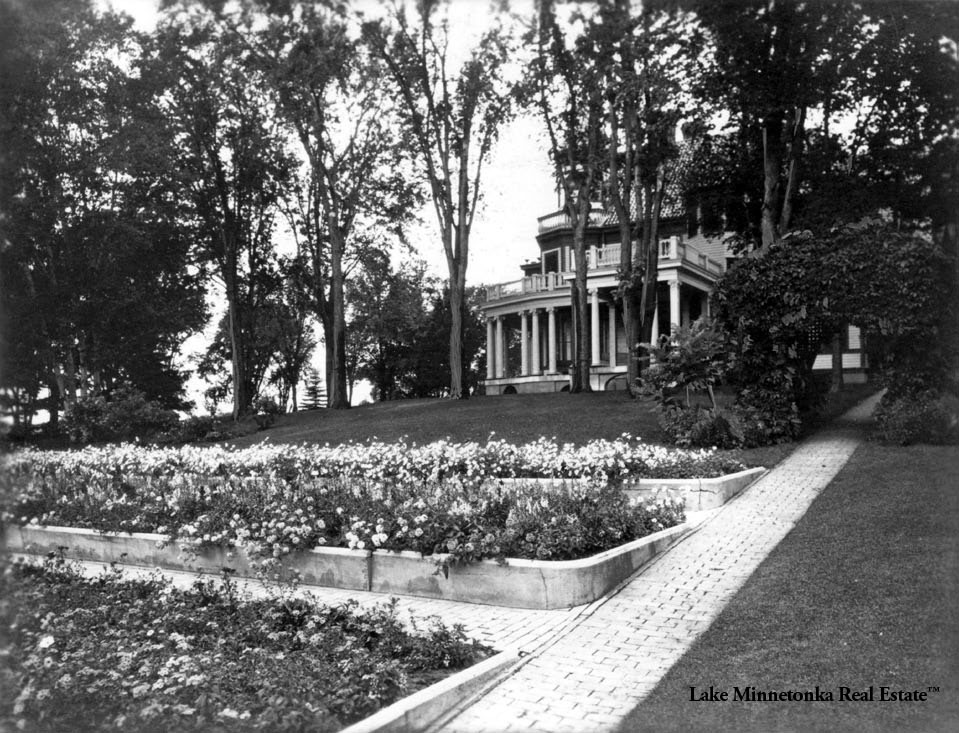
It was never just about the house. Frederick was meticulous about the landscape. The gardens weren’t ornamental—they were an extension of his personality, cultivated with care and almost obsessive precision. It’s said he would notice if even a single rose went missing. At its peak, the estate employed seventeen full-time staff to maintain not only the house and gardens, but also the working farm that covered much of the property. The shoreline—over 8,400 feet of it—framed every view with open water, sculpted trees, and layered perennial beds that carried the scent of old-world Europe.
A Working Estate, A Living Sanctuary
As avid travelers, the Noerenbergs collected trees, vines, and herbaceous plants on their journeys and returned home to plant them. Many of those original specimens still survive today—tucked into arbors, lining paths, or peeking out from beneath century-old maples. The grapevines still bear fruit. The hydrangeas bloom like clockwork. Some of the soil has never been tilled.
The Daughter Who Tended the Garden
Their daughter, Lora Noerenberg Hoppe, carried on the legacy for decades. A trained horticulturist in her own right, she remained the quiet force behind the estate’s maintenance and evolution until her death in 1972 at the age of 85. In her will, she bequeathed the entire property—house, gardens, shoreline, and all—to the public through the Three Rivers Park District. Her one condition: that the home be razed and the land preserved as a living garden.
And so the mansion came down. But the essence of the estate remained.
From Private Refuge to Public Garden
Today, Noerenberg Memorial Gardens is one of the finest formal gardens in Minnesota and a rare example of a lakeside estate that has remained intact, un-subdivided, and true to its original design. The site includes several key architectural elements that recall its past with grace. A grape arbor features vines planted during the Noerenbergs' lifetimes.
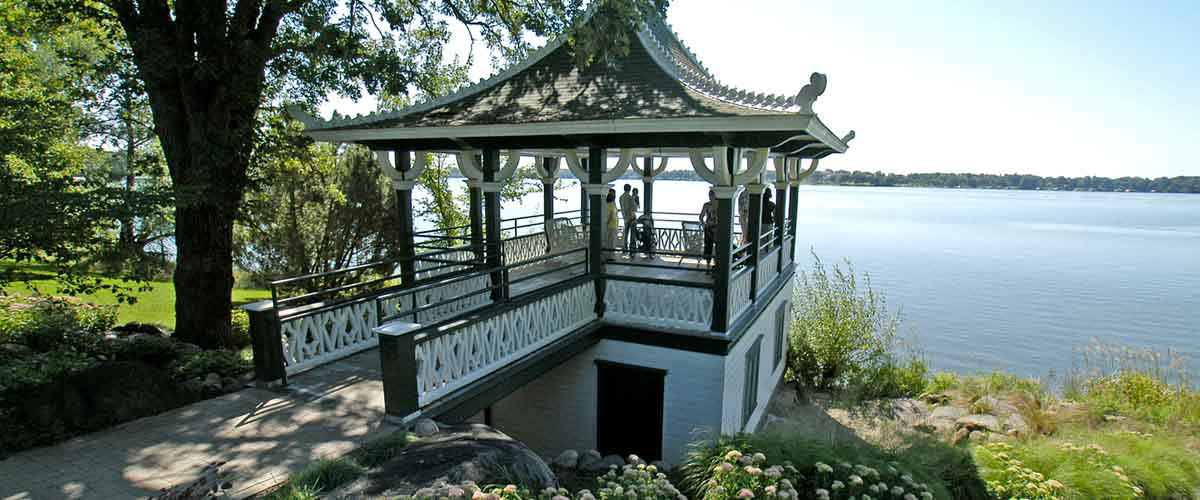
The Boathouse Gazebo, with its distinctive Oriental-style roofline, overlooks Crystal Bay and frames a picture-perfect view of the Lafayette Club in Minnetonka Beach. And the Memorial Colonnade—a stunning tribute of eight white columns—stands where the family home once rose, now serving as a place of quiet reflection.
A bronze plaque set in the walkway beneath the colonnade reads:
“Noerenberg Memorial Country Park is Dedicated to the Use of the Public in Memory of the Frederick and Johanna Noerenberg Family Who Once Lived Here.”
And it is. Though the structure is gone, the spirit of the estate is alive in every footstep, every bloom, every breeze off the bay.
Structures That Still Speak
This is not a place for spectacle. It is a place for slowing down. For remembering what it means to live in rhythm with the land. It’s one of the few remaining properties on Lake Minnetonka where original shoreline meets original intent. The views from the gazebo remain unchanged. The walking paths follow the original north/south and east/west alignments laid more than 100 years ago. The gardens still bloom under sugar maples planted by hand.
Here, Lake Minnetonka whispers rather than shouts. And in a world obsessed with what’s next, Noerenberg remains devoted to what still matters: beauty, stewardship, and belonging.