Wayzata Real Estate: Homes, Condos, Townhomes, Lots, Lakeshore, Luxury, New Construction, Neighborhoods, Rentals, Sell, Market Report.
View Wayzata Market Report Get Your Home Valuation
Wayzata occupies a distinctive place on the northeastern shore of Lake Minnetonka. Its real estate ranges from downtown condominiums and established neighborhood homes to historic lakeshore estates and new custom construction. This guide focuses on the City of Wayzata, which should be distinguished from the larger Wayzata mailing area and school district.
One of the more interesting things about Wayzata is how much of its history can still be read in its residential streets. The homes near the original village center developed quite differently from those on the wooded roads west of downtown, or the estates that took shape along Ferndale Road and Bushaway Road.
In the older village neighborhoods, particularly around Barry and Broadway, houses built in the early twentieth century include cottages and Craftsman-era bungalows, many on traditional town lots. North of Wayzata Boulevard, another generation of homes rose along tree-lined streets during the building years before the Great Depression. Old Holdridge followed a different course: its winding roads and larger, irregular parcels reflect an early suburban plan shaped by the terrain rather than a conventional street grid.
The larger properties along Ferndale and in Locust Hills have a different history. Several originated as country estates, with grounds, outbuildings and long approaches from the road. Some of the original houses survive. Other properties have been divided or rebuilt, leaving a mix of older architecture and newer homes on land that once belonged to much larger estates.
Wayzata's townhomes are found in several distinct settings, from smaller developments on established residential streets to communities near the city's lakes and wooded areas. They offer an alternative to single-family homes without necessarily giving up a private entrance, garage or outdoor space. The experience varies considerably from one development to another.
Waycliffe, on Gleason Lake, includes twin homes built by Ron Clark Construction, with shared lake access described in the community's property information. Ferndale Ridge is along Edgewood Court near Ferndale Road. Other Wayzata developments include Widsten, Hollybrook, Rice Street Brownstones, Wakefield, Marshview. Association arrangements, maintenance responsibilities and any lake or dock rights should be confirmed for the individual property.
Wayzata's condominium buildings tell part of the story of how the old lakeside village has changed. A few blocks from Lake Minnetonka, modest residences built for an earlier generation stand within walking distance of newer buildings that have transformed portions of downtown. The differences are easy to see along Lake Street, Indian Mound Street and the residential streets rising above Wayzata Bay.
Wayzata Villa, on Barry Avenue, is an established condominium community with shared amenities, while Harrington House occupies an elevated position overlooking the bay. Garrison Landing, completed in 2016 by John Kraemer & Sons, has nine residences near Superior Boulevard and Indian Mound Street. Additional condominium properties include Regatta, The Landing, Wayzata Blu, Waypoint, Wayzata Place, Meyer Place at Ferndale, Broadway, Bay Crest, Boatworks. The smaller Wazi development has been described as four custom residences.
Also among Wayzata's condominium properties are Landmark Wayzata and Westway, both described in their project materials as redevelopment plans rather than established older buildings. Whatever the address, lake views, ownership of shoreline and docking rights are distinct matters that should be confirmed for the individual residence.
Wayzata's waterfront has an unusually long residential history. The village grew along Wayzata Bay, but the estates west of downtown followed a very different pattern. The wooded Ferndale peninsula, between Wayzata Bay and Brown's Bay, became a summer retreat for some of Minneapolis's prominent families during the late nineteenth century. These were often more than summer cottages: the larger properties included carriage houses, stables, gardens, guest cottages and boathouses, with the main residences set well back from the road.
Along Ferndale Road, the architectural survey records the Northrup House, built in 1894, with its classical porch and landscaped grounds facing the bay. On Harrington Road, the Crosby estate dates principally to the years between 1907 and 1915, while the Hadley Hull House illustrates a later generation of country-house architecture. Farther east, on Bushaway Road, the Piper, Brooks and Sweatt properties recall the large holdings once associated with Carpenter's Point and Locust Hills. Over time, many of these estates were divided, their houses replaced or their grounds adapted to smaller residential parcels.
Today's shoreline includes historic houses, newer construction and properties whose relationship to the water is less straightforward than an aerial photograph might suggest. A Wayzata mailing address does not necessarily mean the home lies within the city limits. Nor does a view of the lake establish shoreline ownership or dock rights. On any particular property, I look closely at the actual frontage, water depth, exposure, the location of the dock and the documents governing access to the lake.
Some of Wayzata's most substantial homes stand well away from the shoreline. The wooded heights above Ferndale Road, the winding lanes of Old Holdridge and the larger parcels west of downtown have long attracted owners who valued land and privacy as much as a view of Lake Minnetonka. Their histories are quite different from those of the closely settled streets around the original village.
The clearest example is Highcroft. In 1895, grain merchant Frank H. Peavey established a country estate of approximately 110 acres above Wayzata Bay. Architect William Channing Whitney designed its Georgian Revival house, with grounds that included gardens, stables and a working dairy farm. The mansion was demolished in 1953, but the neighborhood retains elements of the former estate's landscape and a surviving carriage house.
Farther east, Locust Hills, near Bushaway Road and Grays Bay, represents a more recent chapter: substantial custom homes set among wooded grounds and shared amenities, with lake access arrangements that should be examined for each property. Elsewhere, newer houses have replaced earlier residences on established estate lots, while other owners have preserved and adapted the older architecture. Both kinds of property are part of Wayzata's luxury market, and a Wayzata mailing address alone should not be taken as proof that a home is within the city limits.
New homes in Wayzata are usually built on land that has already had a history. Unlike communities with large tracts of undeveloped ground, much of the city's construction takes place one property at a time: an older house is replaced, a long-held parcel changes hands, or a new residence takes shape among the cottages, bungalows and country houses of an established neighborhood.
The results can be seen from the traditional village streets near downtown to the larger, wooded lots around Old Holdridge and Ferndale Road. Current MLS offerings include newly built homes on Minnetonka Avenue and Holdridge Circle, though some properties carrying a Wayzata mailing address are actually in neighboring municipalities. The address alone is not a reliable guide to city boundaries or building regulations.
For a buyer considering a custom build or an existing teardown, the land deserves as much attention as the plans. Setbacks, tree coverage, grade, drainage, utilities and, near Lake Minnetonka, shoreland restrictions can determine the practical size and placement of a house. On the older estate parcels, existing structures and site conditions may also influence what can be preserved or rebuilt.
There is relatively little vacant land left in Wayzata. Most opportunities to build begin with an existing property, and the land can have a history quite apart from the house standing on it. Near the original village, lots generally follow the older street grid. Farther west, around Old Holdridge and Ferndale Road, the parcels tend to be larger, more irregular and influenced by the wooded terrain.
Some of the city's most interesting building sites occupy pieces of former country estates. Highcroft, once part of Frank H. Peavey's extensive property above Wayzata Bay, is one example. Land along Bushaway Road and the Ferndale corridor has likewise passed through generations of ownership, subdivision and rebuilding. A generous lot today may represent only a small portion of the original holding.
Recent MLS land offerings include properties on Highcroft Road, Ferndale Road, Bushaway Road and Minnetonka Avenue, although not every property advertised with a Wayzata mailing address is inside the city. Before considering a teardown, new home or division of a parcel, the important questions are what the surveyed boundaries, zoning, setbacks, utilities, easements and site conditions actually permit. Near Lake Minnetonka, shoreline regulations and any claimed dock or access rights require separate examination.
Wayzata Neighborhoods
The city's residential areas differ in architecture, lot patterns, walkability and their relationship to the lake. Historic estate names, informal neighborhood names and recorded subdivisions are not always the same; each adds a different kind of geographic information.
Wayzata Neighborhoods, Locust Hills, Highcroft, Wayzata Highlands, Pigtail Alley, Enchanted Woods, Carpenters Point.
Wayzata Streets and Historic Roads
Many of Wayzata's roads reveal the city's earlier settlement, country estates and later residential development. Their individual histories make the city easier to understand at the property level.
Ferndale Road, Bushaway Road, Harrington Road, Holdridge Road, Ferndale Woods Road, Bovey Road, Far Hill Road, Westwood Lane, Rice Street, Indian Mound Street, Wise Avenue, Shady Lane, Wayzata Boulevard.
Wayzata Architecture and Historic Estates
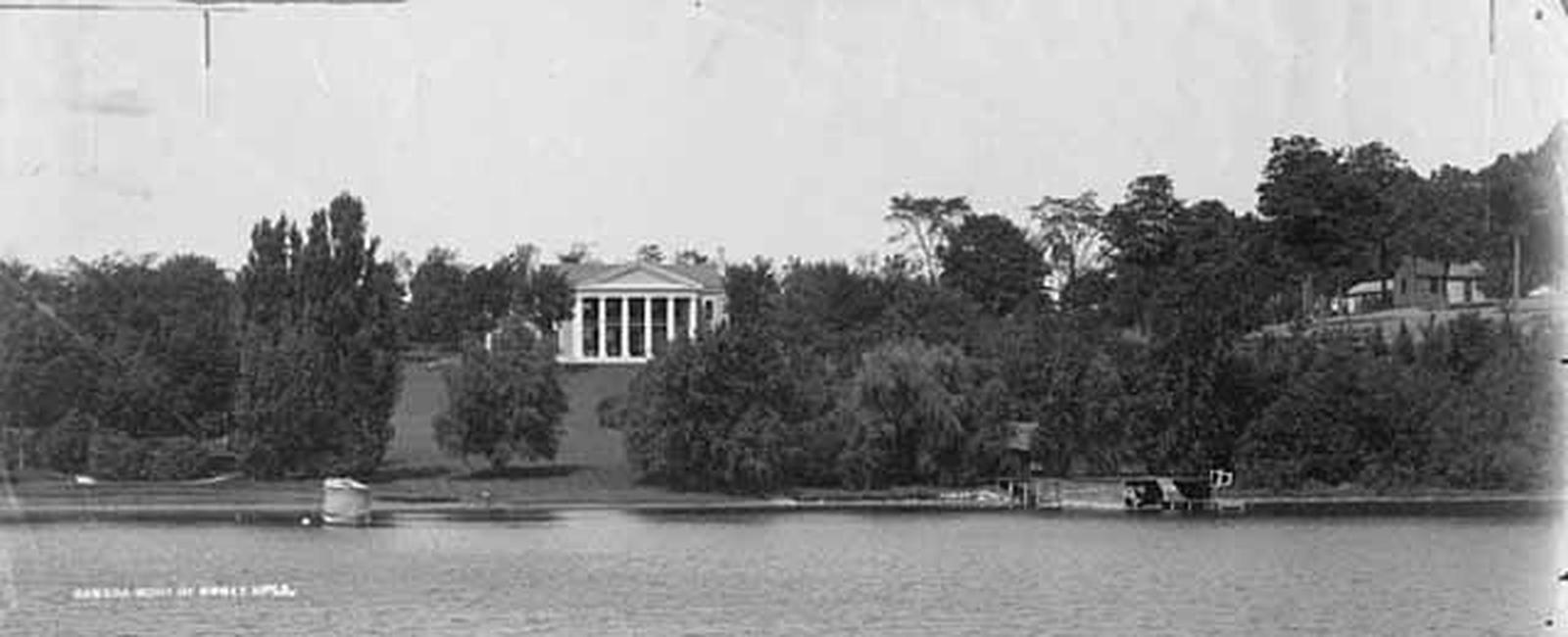
Wayzata's residential landscape encompasses early cottages, country estates, twentieth-century houses and contemporary architecture. Surviving buildings, photographs and historic roads help trace how today's neighborhoods developed.
Lake Minnetonka Architecture, Historic Estates, Ferndale Road, Bushaway Road.
Downtown Wayzata
Lake Street, Panoway, shops, restaurants and public waterfront spaces make downtown a distinct residential setting. Buyers considering downtown property should think about parking, walking routes, building access and seasonal activity as well as distance from the lake.
Wayzata Real Estate Market
In a relatively small city with diverse property types, a few high-value sales can materially shift average and median figures. Comparing similar properties and separating downtown condominiums from lakeshore and inland single-family homes produces a more useful picture.
Wayzata Market Report, Get Your Home Valuation.
Wayzata Rentals
Rental opportunities in Wayzata include houses, townhomes and condominiums, depending on availability and applicable association rules.
Wayzata Rental Properties.
Buying and Selling in Wayzata
Understanding a property's location, history, improvements and potential future use is central to making an informed decision. Daniel and Elisha Gustafson work with buyers and sellers throughout Wayzata and the Lake Minnetonka area.
Request a Property Valuation.


 The data relating to real estate for sale on this web site comes in part from the Broker Reciprocity Program of the Regional Multiple Listing Service of Minnesota. Real estate listings held by brokerage firms other this firm are marked with the Broker Reciprocity logo. Information Deemed Reliable But Not Guaranteed. Property locations as displayed on any map are best approximations only and exact locations should be independently verified.