The Legacy of Lake Minnetonka Farms
Lake access, land legacy, and the westward pull of acreage
Long before Lake Minnetonka became synonymous with luxury lake homes, yacht clubs, and summer retreats, it was a working landscape. Across the bays and points, farms once stretched from the wooded edges of the Big Woods to the open prairies near Minnetrista, Mound, and Medina. These Lake Minnetonka farms weren’t weekend hobbies—they were the backbone of the western suburbs.
Today, many of those historic farms are gone. Others live on—quietly—tucked behind tree lines or passed from one generation to the next. And as land becomes increasingly scarce, there’s a growing conversation around preserving, stewarding, and investing in acreage around the lake.
This is the legacy of Lake Minnetonka farms.
Types of farms historically found around Lake Minnetonka
Lake Minnetonka's agricultural roots are more diverse than many realize. From dairy to orchards, small grains to berries, these farm types once defined the region:
Dairy farms – prized herds of Guernsey and Jersey cattle dotted the Minnetonka landscape. Boulder Bridge Farm (Smithtown Bay), Highcroft (Wayzata), and Little Orchard (Maxwell Bay) were renowned for milk quality, butterfat yields, and progressive herd management.
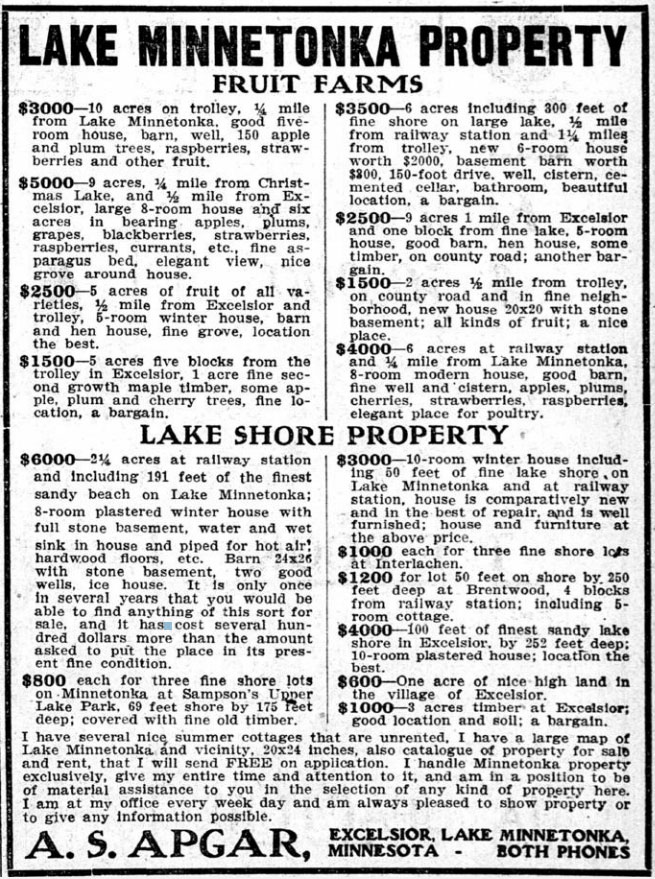
Orchards and fruit farms – Excelsior, Tonka Bay, and Shorewood were especially known for strawberries, grapes, apples, and plums. The Excelsior Fruit Growers Association once shipped railcars of berries to Chicago and New York.
Gentlemen farms – Estate-style farms like those on Bushaway Road, Brackett’s Point, and Ferndale weren’t purely commercial. They were part agricultural showcase, part leisure retreat, owned by Minneapolis families looking to cultivate a certain rural prestige.
Grain and hay farms – Western reaches of Minnetrista, Orono, and Independence grew oats, alfalfa, and corn. Some of these fields fed livestock while others were baled and sold.
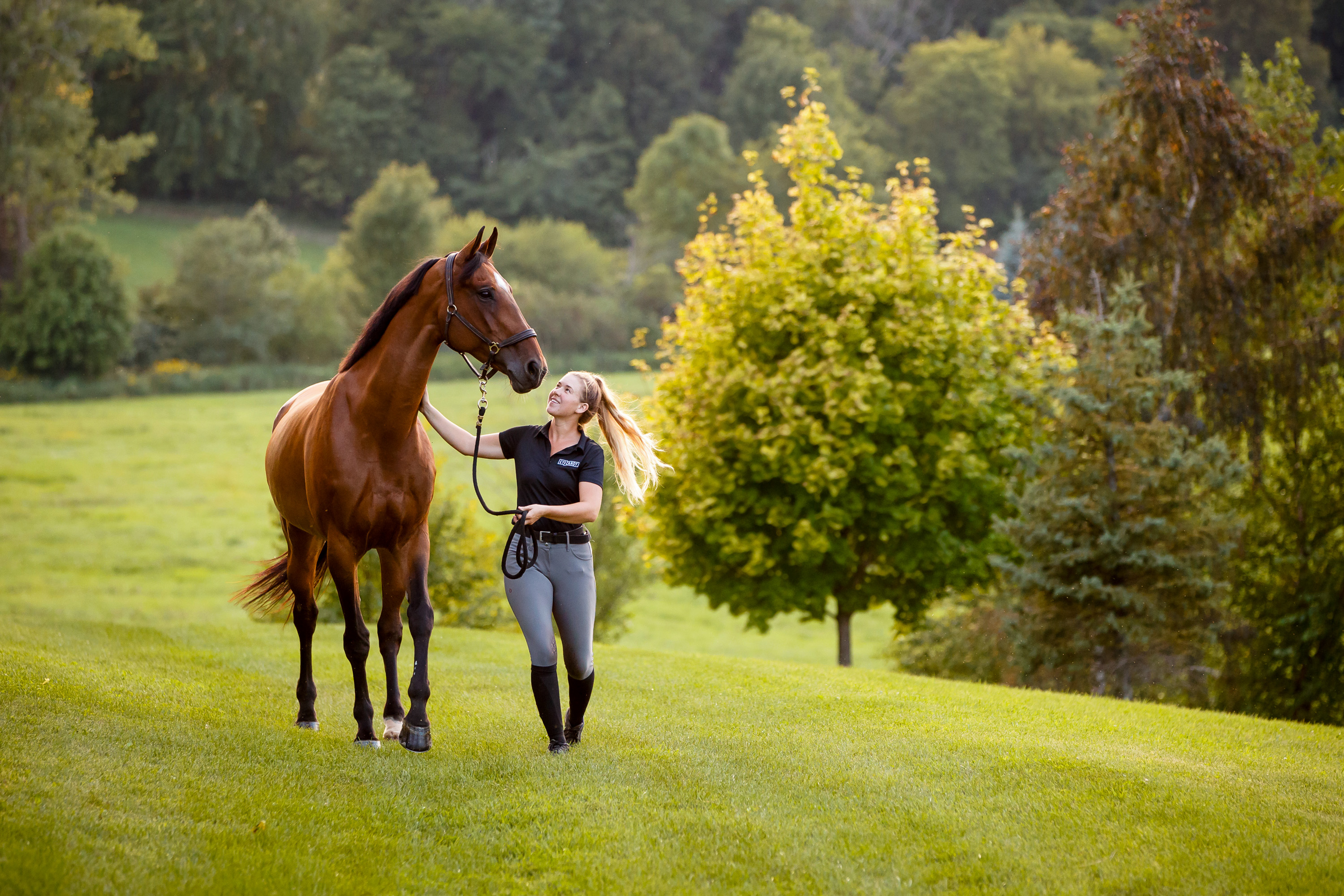
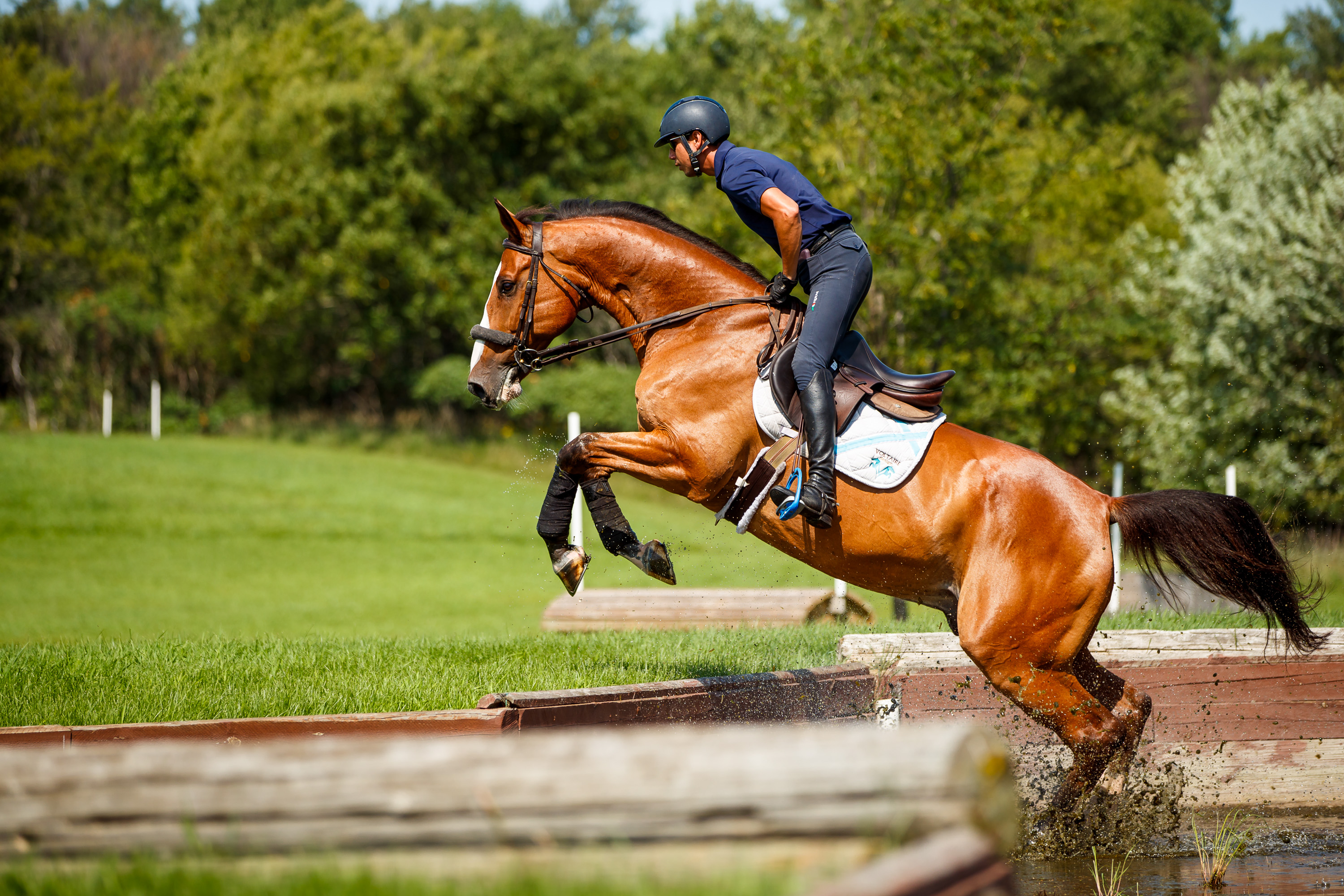
Horse farms and riding estates – From Locust Hills to Long Lake, equestrian estates became common in the mid-1900s. These often combined pasture, trails, and training rings.
Market gardens – Early settlers like the Lathams and Braden families raised kitchen crops and specialty produce. Local restaurants and boarding houses purchased directly from these farms.
Notable legacy farms and early families
The Halsteads established a homestead in 1855 on what is now Halstead’s Bay. Captain Frank Halstead returned from the Civil War to run cattle and build a larger cabin known as The Hermitage.
Carpenter’s Point near Gray’s Bay was once a 700-acre farm owned by H.M. Carpenter. It later became part of the Locust Hills equestrian estate and is now a private development with trails and stables.
Boulder Bridge Farm (originally Rose Farm), built by George and Grace Dayton of Dayton’s department store fame, housed 200 Guernseys and 70 Belgian draft horses. Their 800-acre Smithtown Bay estate was legendary for both agriculture and hospitality.
Highcroft Farm on Ferndale Road West featured an award-winning Guernsey dairy operation managed by the Heffelfinger family. It later became known for philanthropy and horse breeding.
Shorewood’s “Meadowcroft” was a vineyard and horse farm owned by D.D. Tenney, who also ran one of the lake’s original sawmills.
Meyer Brothers Dairy, founded in the 1930s, ceased operations in Wayzata years ago.
Excelsior’s orchards and berry farms were supported by families like the Lathams, Brackens, and Whipples. They pioneered Minnesota fruit varietals and operated stands, stores, and commercial shipping.
Historic Wayzata-area farms and dairies
Ellen Wilson Meyer records several named agricultural properties in Happenings Around Wayzata:
- Freedom Farms (Fred G. Atkinson) - a prizewinning Jersey dairy north of Wayzata; the property was later subdivided.
- Cris Cros Farm - a 120-acre Guernsey dairy associated with Crosby, Christian and McKnight interests; the land later became Holdridge Circle.
- Grathwol Dairy Farm - Jersey dairy operation on St. Albans Bay.
- Wood End Farm - model dairy near Mound, visited on a 1929 Farm Bureau tour.
These names belong to the lake's agricultural history rather than its directory of private residential estates.
Additional historic dairies and country farms
- Hollybrook Farm - John M. Hollern; dairy property near Watertown, following his Wayzata-area dairy operation.
- Windyhill - William J. Nickerson; dairy established in 1943 near Ferndale Avenue and County Road 6.
- Woodend Farm - Albert C. Loring; model dairy on the Upper Lake. This historical name is distinguished from Wood End Farm near Mound in the accounts consulted.
Early farms of Ferndale and Wayzata
- Harrington Farms - John S. and Minerva Harrington; early agricultural holding with orchards and vineyards, portions of which became summer properties in Ferndale.
- Holtz Farm - early agricultural holding north of the Harrington property, later sold in parcels for summer residences.
Historic farms of Orono and the north shore
Among the named agricultural properties recorded in Orono, Minnesota 1889-1979: 100 Years "By the Waters of Minnetonka" are:
- Forest Farm - Charles Deere Velie; north shore of Maxwell Bay.
- Hollowood Farm - George Case and Elizabeth Calderwood; established 1912.
- Little Orchard Farm - Mabel Tuttle's hobby farm, Maxwell Bay, 1923-1936.
- Meadowbrook Farm - C. R. Brackett; Jersey dairy herd.
- Moreton Fields - Charles C. Webber; north of Crystal Bay.
- Shorewood Farm - D. D. Tenney; land acquired from James J. Hill.
- Summit Park Farm (Bowman family) - historical dairy property; land later associated with Wayzata Country Club.
- W. E. Nelson Holstein Farm - in the present-day Freshwater Foundation area.
Early farms of Mound and the Upper Lake
The early histories of Mound record agricultural holdings that preceded many of the Upper Lake's summer neighborhoods. These properties are identified by their owners, rather than by independently documented farm names.
- Levi Bowers Farm - an early family farmholding in the Mound and Minnetrista area.
- Frederick A. Jennings Farm - an early Mound-area agricultural holding associated with land Jennings acquired in 1857.
- Frank Carman Farm - a Cooks Bay-area property later sold to Mr. Priest for summer-cottage development.
Westward shift: Where the farms are now
While Lake Minnetonka farms are increasingly rare near the shoreline, legacy agricultural properties still exist further west and northwest. Areas such as Independence, Medina, Corcoran, Loretto, Greenfield, Watertown, Mayer, and Delano continue the tradition.
Some remain active family farms. Others are owned for privacy, equestrian use, or investment. Still others are under quiet consideration for preservation easements, selective development, or generational transfer.
In Minnetrista and St. Bonifacius, you’ll still find gravel drives leading to barns, hay fields beside hidden coves, and landowners who keep an eye on both the soil and the lake.
Questions for buyers considering Lake Minnetonka farmland or acreage
- What kind of farming or land use are you envisioning: equestrian, hay, pasture, orchards, hobby farming, or conservation?
- Do you want to preserve an existing farmhouse or build something new with historical influence?
- What is your philosophy around land stewardship, soil health, and potential conservation easements?
- Is your interest recreational, agricultural, generational, or investment-oriented?
- Would you prefer privacy, legacy, or potential subdivision value?
- Are you looking for lakeshore with acreage, or higher-ground parcels with views?
- Do you value historical continuity or a fresh start?
A legacy worth continuing
At Lake Minnetonka Real Estate, we don’t just sell lake homes—we understand the deeper value of land. The farms around Lake Minnetonka tell stories of early settlers, hard seasons, good soil, and families who built something lasting.
Whether you’re buying acreage to steward, sell, build, or simply belong—your land tells a story too. And we’d be honored to help you write that next chapter.
If you own farmland in the western suburbs and are considering your next step, we offer discreet, strategic representation for both buyers and sellers of acreage properties.


 The data relating to real estate for sale on this web site comes in part from the Broker Reciprocity Program of the Regional Multiple Listing Service of Minnesota. Real estate listings held by brokerage firms other this firm are marked with the Broker Reciprocity logo. Information Deemed Reliable But Not Guaranteed. Property locations as displayed on any map are best approximations only and exact locations should be independently verified.